Sofia Roth · 5 September 2026
Shifting Priorities in Resource Allocation Lead Cabinwood Residents to Explore Alternative Building Materials
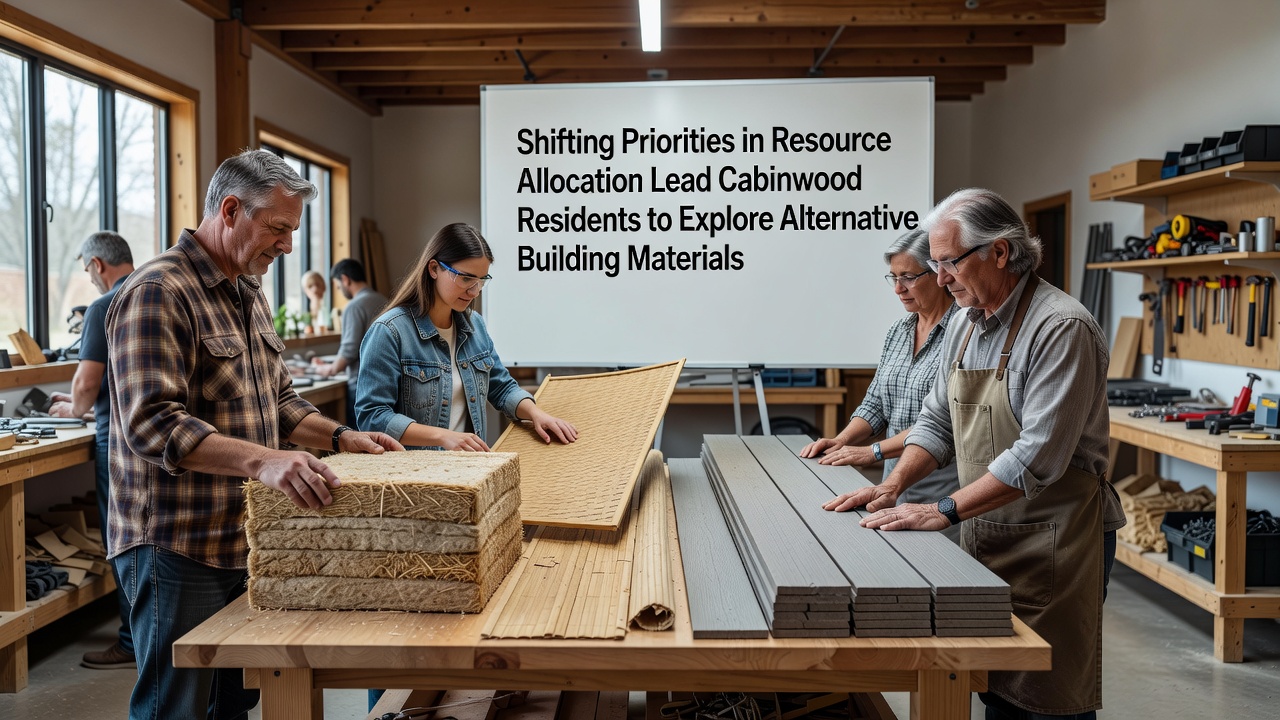
Resource allocation patterns have changed across Cabinwood communities in recent years, prompting residents to consider materials beyond traditional timber for new construction and repairs. Data from regional forestry assessments show that timber harvest volumes allocated to residential use dropped by 18 percent between 2023 and 2025, while demand for housing upgrades remained steady. Those shifts trace back to updated land management plans that prioritize watershed protection and wildlife corridors over single-use timber extraction.
Policy Changes Reshape Material Availability
Local planning boards adjusted permitting rules in early 2025 to reflect broader federal guidelines on sustainable land use. According to reports from the U.S. Forest Service, Cabinwood-area timber stands now fall under multi-use designations that limit annual cuts for private building projects. Residents who once relied on local mills for dimensional lumber now face longer lead times and higher per-unit costs. In September 2026, county records indicate that 47 new permit applications listed composite or recycled materials as primary structural components, up from just nine similar filings two years earlier.
Researchers at the University of British Columbia's Centre for Sustainable Building tracked similar transitions in comparable forest-adjacent communities and found that policy-driven supply constraints often accelerate adoption of non-wood framing systems. Their analysis shows that steel stud and cross-laminated timber hybrids reduced overall project timelines by an average of three weeks when local wood supplies tightened.
Cost and Supply Factors Drive Material Choices
Market data compiled by the National Association of Home Builders reveal that softwood lumber prices rose 22 percent in the Pacific Northwest supply region during the first half of 2026. Cabinwood contractors report that delivered prices for standard studs increased from $4.80 per piece in 2024 to $6.15 in mid-2026. These figures prompted several building firms to test alternatives such as bamboo-based sheathing and recycled-content insulation panels. One contractor noted that switching to these products cut material expenses by roughly 14 percent on a 1,800-square-foot cabin renovation completed last spring.
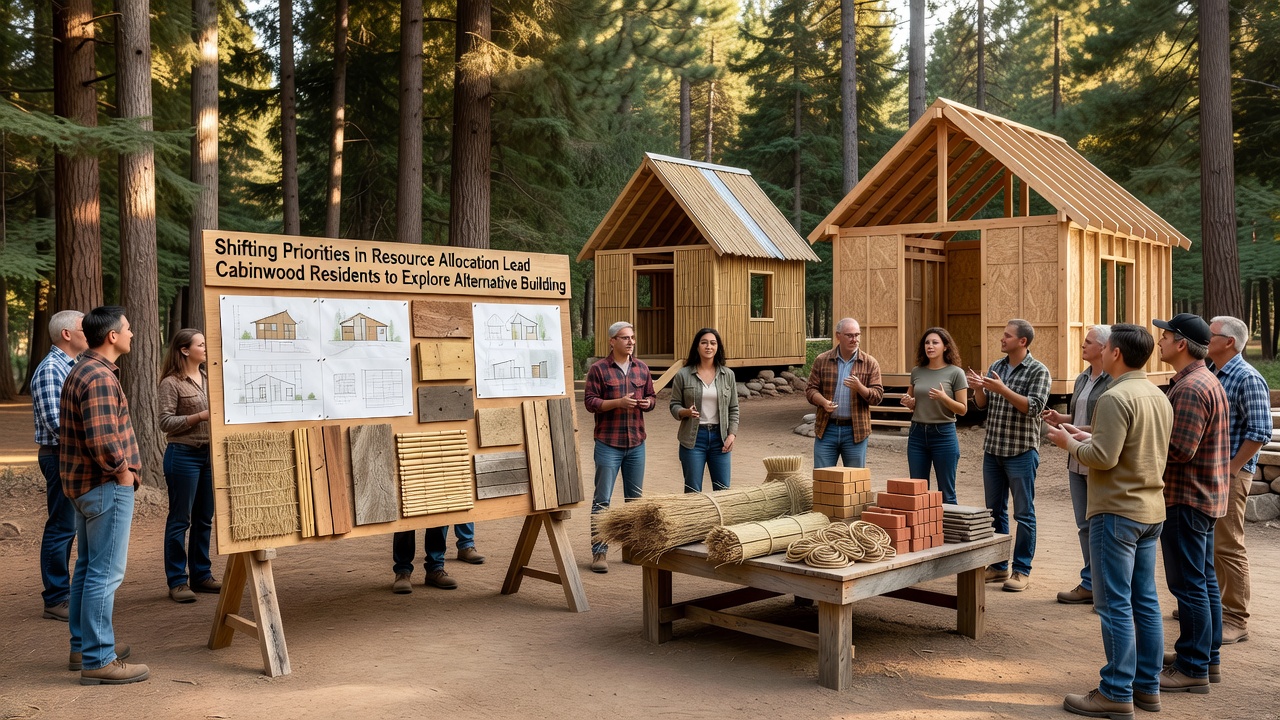
Supply chain reports from the Canadian Wood Council indicate that cross-border shipments of engineered wood products have also slowed because of new phytosanitary inspections. Cabinwood residents who previously imported glulam beams from British Columbia now evaluate domestically produced alternatives including recycled steel framing and hempcrete blocks. Figures from the U.S. Department of Commerce show that imports of steel construction products rose 31 percent in the western states during the same period.
Community Examples of Material Transitions
Take one family who replaced an aging deck using fiber-reinforced polymer decking instead of pressure-treated pine. The project documentation submitted to the county shows the material choice aligned with updated fire-resistance standards that favor non-combustible surfaces in high-wildfire-risk zones. Another case involves a small cooperative that retrofitted three rental cabins with structural insulated panels containing 60 percent recycled content. County assessor records list these retrofits as completed in August 2026 and note a 9 percent reduction in estimated heating costs compared with previous wood-frame equivalents.
Observers at the Western Forestry and Conservation Association have documented how such adaptations spread through informal networks of contractors and homeowners. Their 2026 field notes describe monthly material-sharing meetings where residents compare performance data on bamboo flooring, magnesium oxide sheathing, and aerogel-enhanced insulation. These gatherings occur without formal sponsorship yet consistently draw 25 to 40 participants.
Performance Data and Regulatory Alignment
Testing conducted by the National Institute of Standards and Technology on several alternative products shows that many meet or exceed ASTM standards for structural load, moisture resistance, and thermal performance. Cabinwood building officials now accept these test results as equivalent to traditional lumber ratings when permit applications include third-party verification. The shift reduces inspection delays because inspectors can reference standardized reports rather than requesting site-specific engineering calculations for each wood substitution.
Environmental Protection Agency summaries on embodied carbon indicate that switching from virgin lumber to recycled steel framing can lower a project's total carbon footprint by 35 to 48 percent depending on transportation distances. Cabinwood residents who track these metrics for grant eligibility have begun including such calculations in project files. One development group secured partial funding through a state energy-efficiency program after documenting a 41 percent reduction in embodied carbon for a six-unit cluster built with hybrid steel and composite materials.
Conclusion
Resource allocation adjustments continue to influence material decisions in Cabinwood, with residents incorporating performance data, cost comparisons, and regulatory requirements into their planning processes. Ongoing monitoring by regional agencies and academic groups will track how these choices affect long-term durability and maintenance patterns across the community.