Frankie Sullivan · 19 September 2026
Microclimates: The Hidden Drivers of Rare Plant Persistence in Cabinwood Valleys
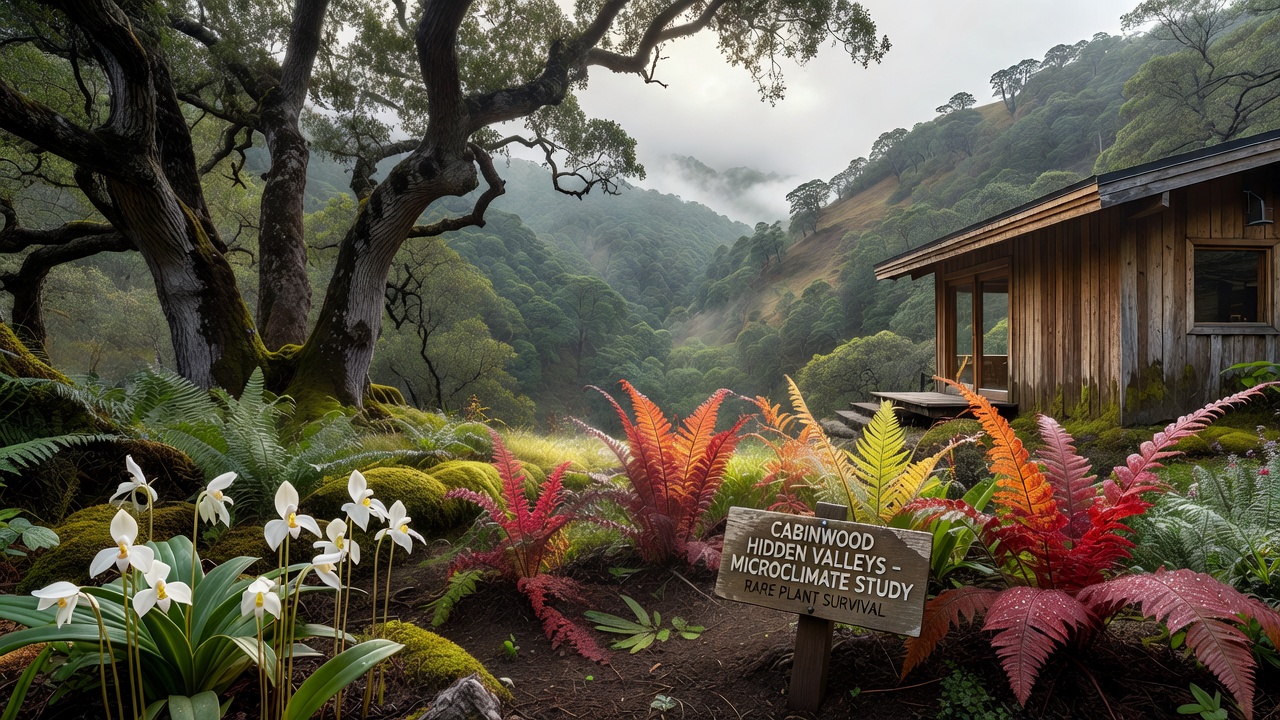
Topography in Cabinwood creates pockets where temperature, moisture, and light differ sharply from surrounding ridges, and these localized conditions allow certain rare plants to persist where broader regional climates would otherwise limit them. Researchers have mapped these variations across multiple valleys using sensor arrays that record hourly data on air and soil conditions, revealing consistent patterns of cooler, more humid refugia in north-facing slopes and depressions shielded by dense tree cover.
Topographical Influences on Local Conditions
Steep walls and narrow drainages in the area channel cold air downward at night while blocking direct sunlight during much of the day, producing temperature drops of several degrees compared with open ridges, and this gradient supports species sensitive to heat stress. Soil moisture remains elevated because reduced evaporation combines with runoff from surrounding slopes, creating conditions that favor mosses, ferns, and certain orchids documented in surveys from the past decade. Data collected through 2025 showed these microclimates maintain relative humidity levels 15 to 20 percent higher than adjacent forests during summer months, according to records from the U.S. Geological Survey ecosystem monitoring program.
Plant Species and Their Adaptations
Several endemic species, including a rare variety of lady's slipper orchid and an uncommon liverwort, appear only within these sheltered zones where frost pockets protect dormant seeds through winter and spring fog supplies additional water. Observers note that seedlings of these plants establish successfully at rates several times higher inside microclimate boundaries than outside them, while genetic studies indicate limited gene flow between valley populations and those on exposed slopes. In September 2026, expanded field teams documented new occurrences of a threatened fern species in two previously unstudied drainages, confirming the role of consistent shade and humidity in recruitment success.

Wind patterns add another layer because valley orientations reduce desiccation from prevailing gusts, allowing delicate foliage to retain moisture longer than on wind-exposed plateaus. Soil chemistry also varies subtly, with higher organic content accumulating in low-light areas that slow decomposition and maintain nutrient availability for specialized root systems.
Seasonal and Long-Term Influences
Seasonal shifts amplify these effects when autumn leaf fall increases insulation on the forest floor and spring snowmelt creates temporary seeps that extend the growing period for moisture-dependent species. Long-term monitoring shows that years with prolonged regional drought still leave valley bottoms with adequate soil water, protecting populations that would face higher mortality elsewhere. EPA climate adaptation resources describe similar buffering in other forested landscapes, while studies from Environment and Climate Change Canada illustrate parallel patterns in boreal valleys where microclimates sustain disjunct plant communities.
Human activities such as selective thinning or trail construction can alter airflow and light penetration, potentially shrinking the extent of favorable zones, yet current management protocols emphasize retention of canopy cover to preserve these refugia. Ongoing sensor networks continue to track changes, providing baseline information for future comparisons as regional temperatures rise.
Conclusion
Localized climate variations within Cabinwood valleys function as critical habitat components for rare plants by moderating extremes that prevail across the broader landscape, and continued documentation of these interactions supplies essential data for understanding plant distribution and persistence over time.